
Capital That Knows How to Wait: The Conditions That Make Patient Capital Real
In episode 33 of Shifting to Ethical Systems, Esteban Fernandez Drovetta moves past the idea of patient capital and into what it actually requires. Not as a philosophy, but as a set of conditions that either hold an investment relationship together or undermine it.
"Patient capital without the right conditions isn't patient capital. It's slow money with fast assumptions."
Building anything real takes time. Any company, any social enterprise, any community-rooted project. And yet the investment culture we operate in often behaves as though this isn't true, as though a strong enough team or compelling enough pitch should compress the timeline.
Patient capital, properly understood, is not a concession. It is a different theory of what makes an investment sound. It recognises that the most vulnerable years of any enterprise, when cash is short, the model is being tested, and the community is watching to see if you mean what you say, are precisely the years that need the most stable, least conditional support. That is not charity. It is strategy.
Here's the tension: patient capital has become fashionable. It is on every investment office's website, which means it has also become something people claim without always practising. Investors say they are patient, until the second year is harder than projected, until a community process takes longer than the model assumed.
So the question is not whether an investor describes themselves as patient. It is whether the conditions of the relationship actually support patience, or undermine it.
And here are three reflections that stayed with us from this episode:
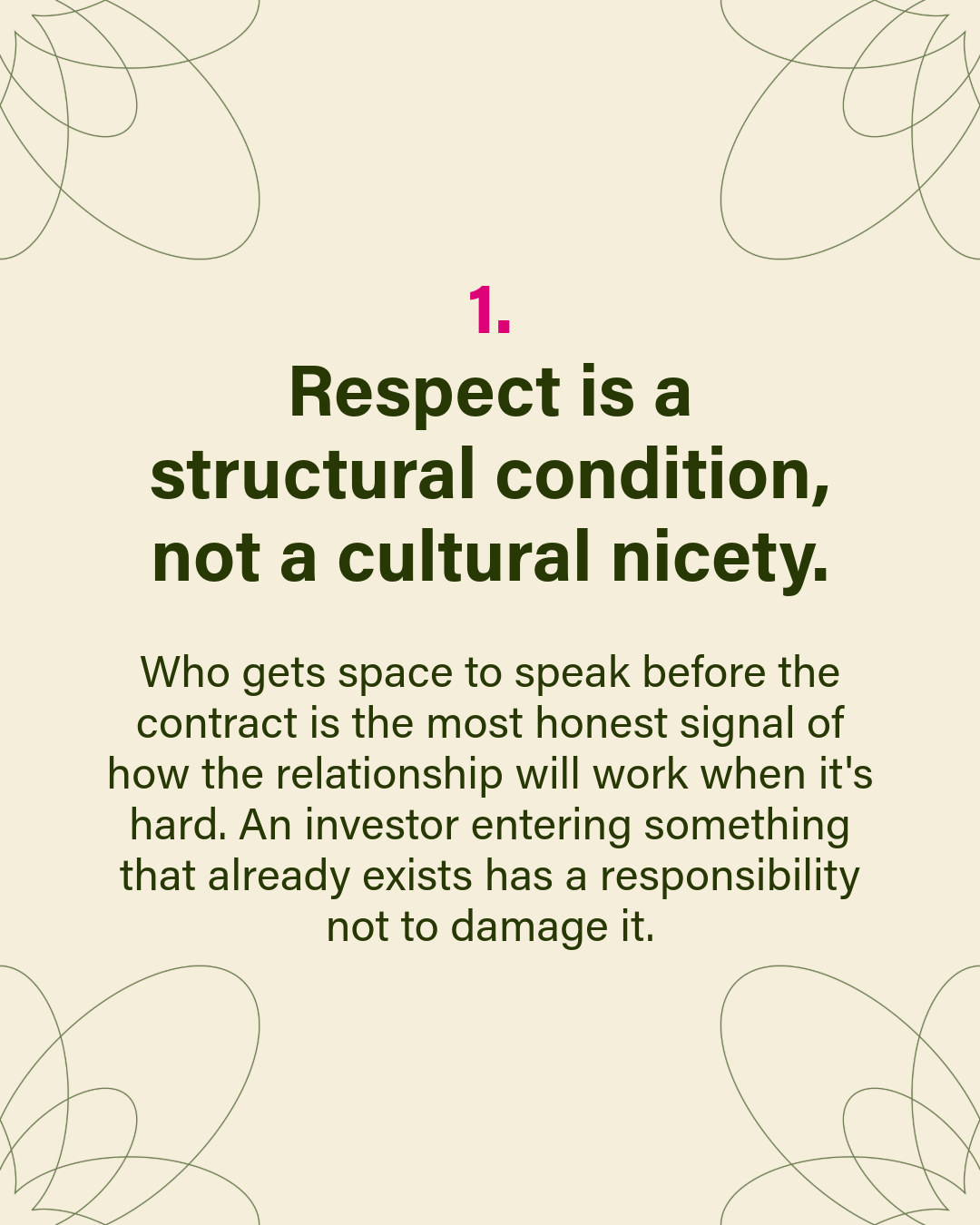
1) Respect is a structural condition, not a cultural nicety.
A few years ago, JERICA was in early conversations about funding a Catalyst Project. The capital was significant. But the investor wasn't curious about the project or the community, and when the local community leader came to speak, they were given no space. That isn't a personality flaw you can work around. It is a structural assumption: that capital is the primary asset in the room, and everyone else is secondary. Genuine respect changes the architecture of the relationship. It means an investor understands they are entering something that already exists, with value they did not create, and that they have a responsibility not to damage it. JERICA walked away. The community saw that when the choice came, we held the conditions rather than chasing the capital.
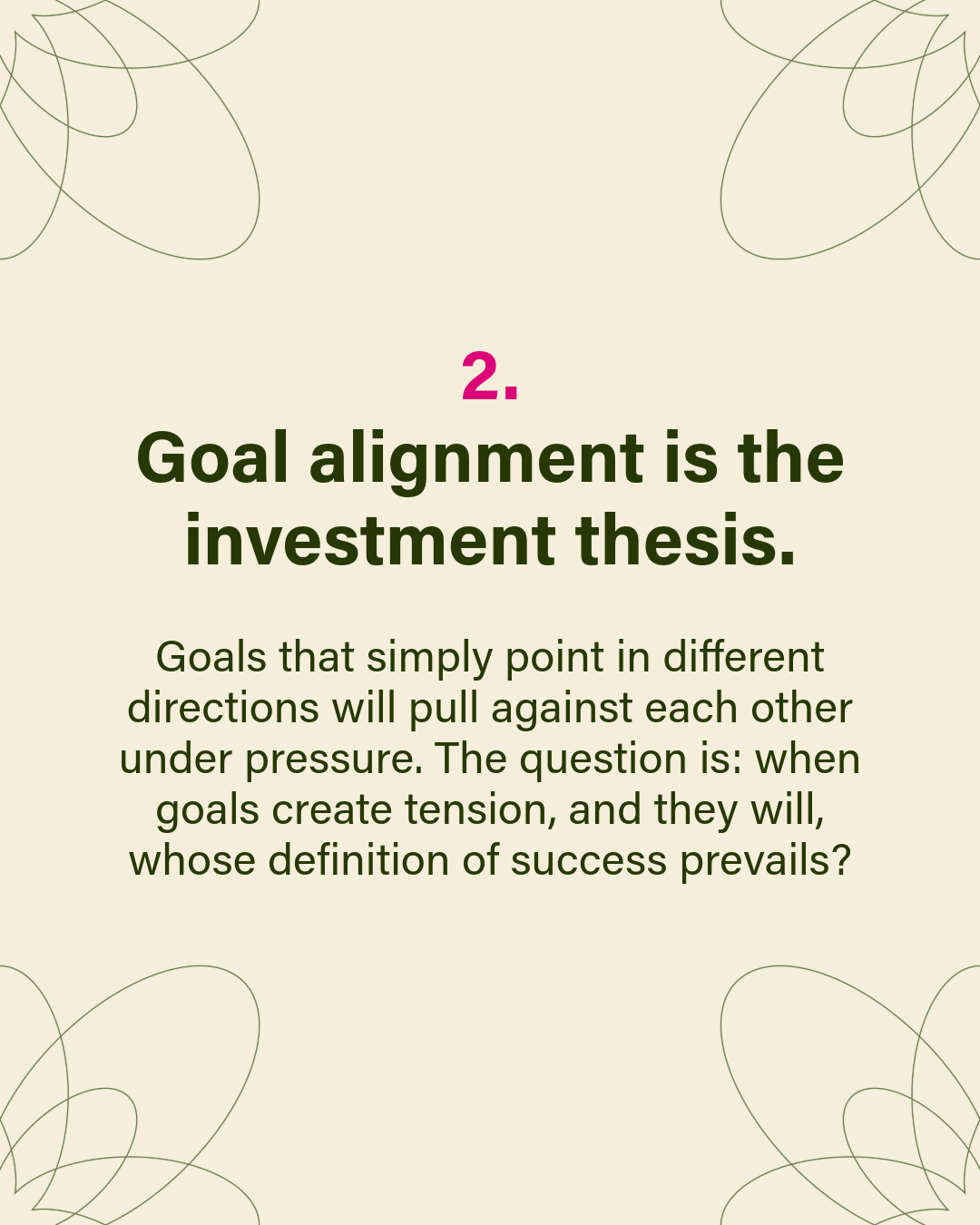
2) Goal alignment is the investment thesis, not a formality.
One of the quietest risks in any investment relationship is misaligned goals that neither party names at the start. Not goals that are opposed, but goals that point in sufficiently different directions that, under pressure, they pull against each other. In impact work this shows up as a theory of change that gradually shifts, a compromise here, a priority quietly deprioritised because the investor's reporting requirements don't have a field for it. The question to ask before the relationship begins is not just "do we agree on the vision?" It is "when our goals create tension, and they will, whose definition of success prevails?"
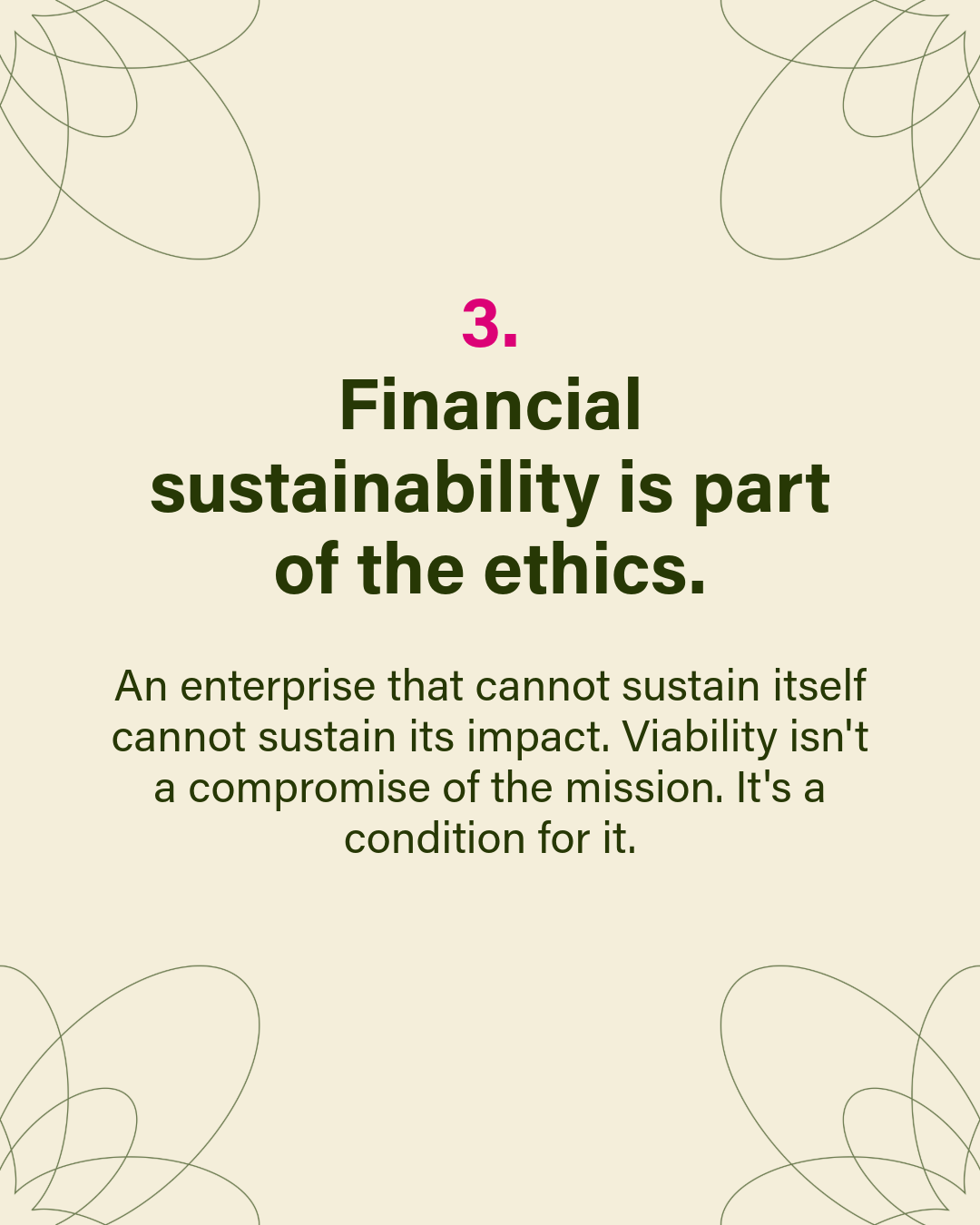
3) Financial sustainability is part of the ethics, not a compromise of them.
There is a version of impact-first thinking that treats financial sustainability as a concession. That view is not ethical. It is naive, and it causes real harm. An enterprise that cannot sustain itself financially cannot sustain its impact. Communities that have invested trust and time in a programme that collapses because it was undercapitalised do not experience that as a noble failure. They experience it as another broken promise. Patient capital, properly structured, supports the vulnerable years because a sustainable return requires a sustainable enterprise, and sustainability takes time to build.

Episode breakdown:
00:45 Patient Capital Beyond the Label
Why patient capital is more than waiting longer for returns, and the conditions that make it real.
03:14 The Tension: When "Patient" Investors Become Impatient
How pressure often appears during the most vulnerable years of a project, when relationships and trust need protecting most.
05:18 A Conversation That Changed Everything
Why JERICA chose to walk away from significant investment when respect for the community was missing.
08:10 Respect Is a Structural Condition
Why genuine respect shapes every investment relationship, long before contracts are signed.
10:24 Goal Alignment Beyond Shared Vision
Why aligned values are not enough. The real question is whose priorities prevail when difficult decisions arise.
12:51 Financial Sustainability Is Ethical
Why building financially viable enterprises is essential to creating lasting social and environmental impact.
15:15 Designing Better Investment Relationships
How investor behaviour, shared goals, and long-term financial planning change when patient capital becomes a set of conditions rather than a timeline.
17:42 Patient Capital in Practice
How JERICA designs Catalyst Projects around respect, goal alignment, and financial sustainability, attracting the right partners, not simply the nearest capital.
If this episode resonated, share it with someone who's navigating a funding conversation where something feels off, where the offer is real but the conditions aren't quite right.
Because the wrong investment, however well-intentioned, can do more damage than no investment at all. That is not a reason to be afraid of capital. It is a reason to be precise about it!