
Rest as Resistance: Why Sustainable Leadership Requires You to Stop
In episode 27 of Shifting to Ethical Systems, Jules Harrison-Annear makes a case that lands somewhere uncomfortable for a lot of us: rest is not a productivity hack or strategic recovery. It is a non-negotiable part of ethical leadership, and a form of resistance against the extractive systems we are trying to change.
"Rest isn't just recovery. It's where insight lives."
The dominant culture of productivity, hustle, scale, always-on, is itself an extractive system. It extracts from workers, from communities, and from the people trying to change it.
So if you are building an ethical, regenerative business and running yourself into the ground to do it, there is a real irony. You are applying the logic of the extractive system to yourself, in the service of replacing it. That doesn't work, logically or practically. You cannot build regenerative systems on a depleted foundation, and you cannot model humane leadership while ignoring your own humanity.
The urgency is real. Climate change is not waiting for anyone to take a holiday. But burned-out leaders make worse decisions. Depleted founders take shortcuts they'd never take at full capacity. And when we treat depletion as the price of caring, we teach everyone around us that this is what leadership looks like. That is its own kind of harm.
And here are three reflections that stayed with us from this episode:
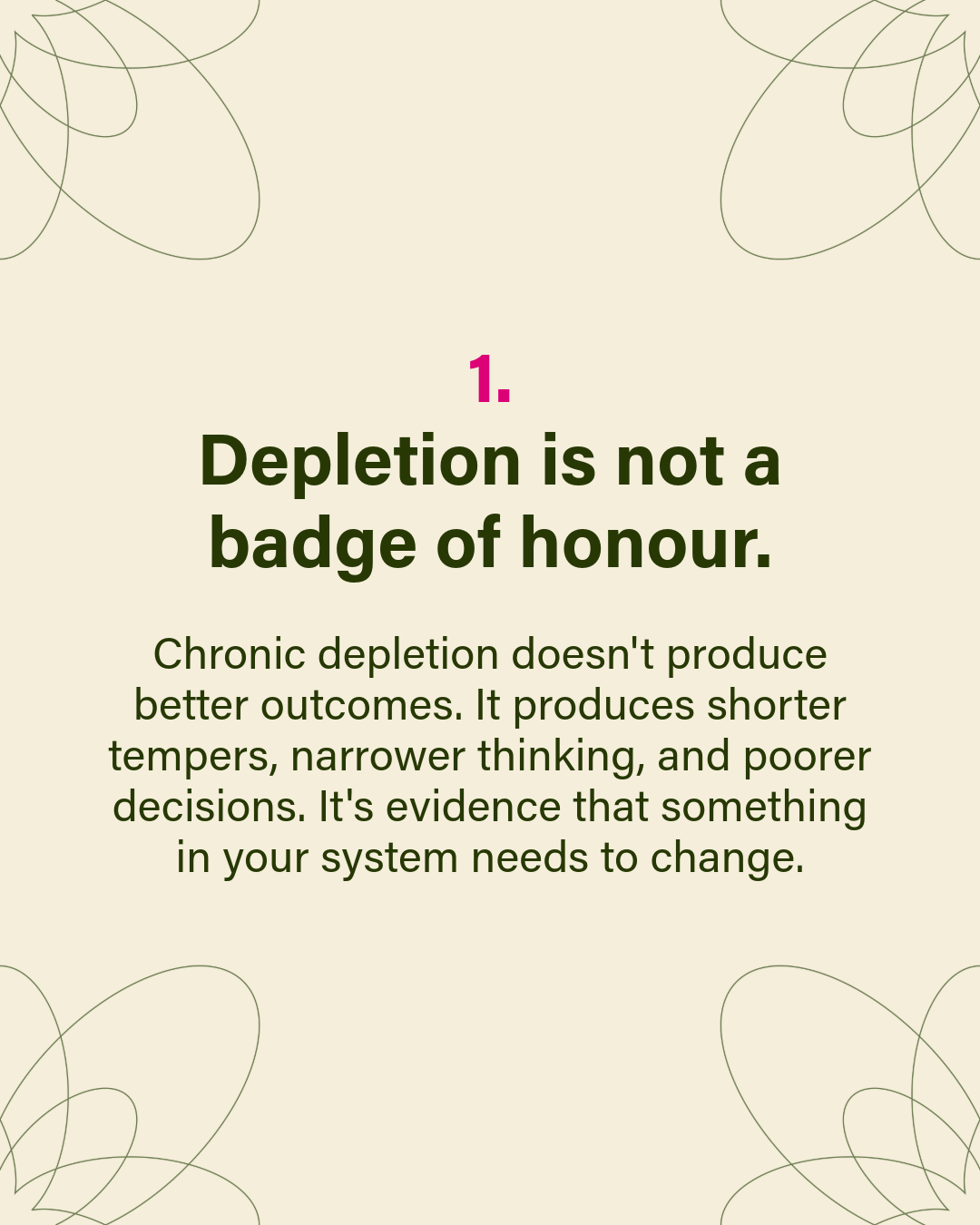
1) Depletion is not a badge of honour.
There are real moments in leadership that demand extraordinary output, genuine crises where you dig in and find something beyond what you thought you had. The problem is when that mode becomes the default, when every week is a crisis week not because the work demands it, but because intensity has become an identity. Chronic depletion produces shorter tempers, narrower thinking, reduced empathy, and eventually a reckoning that is usually more dramatic than the rest that would have prevented it.
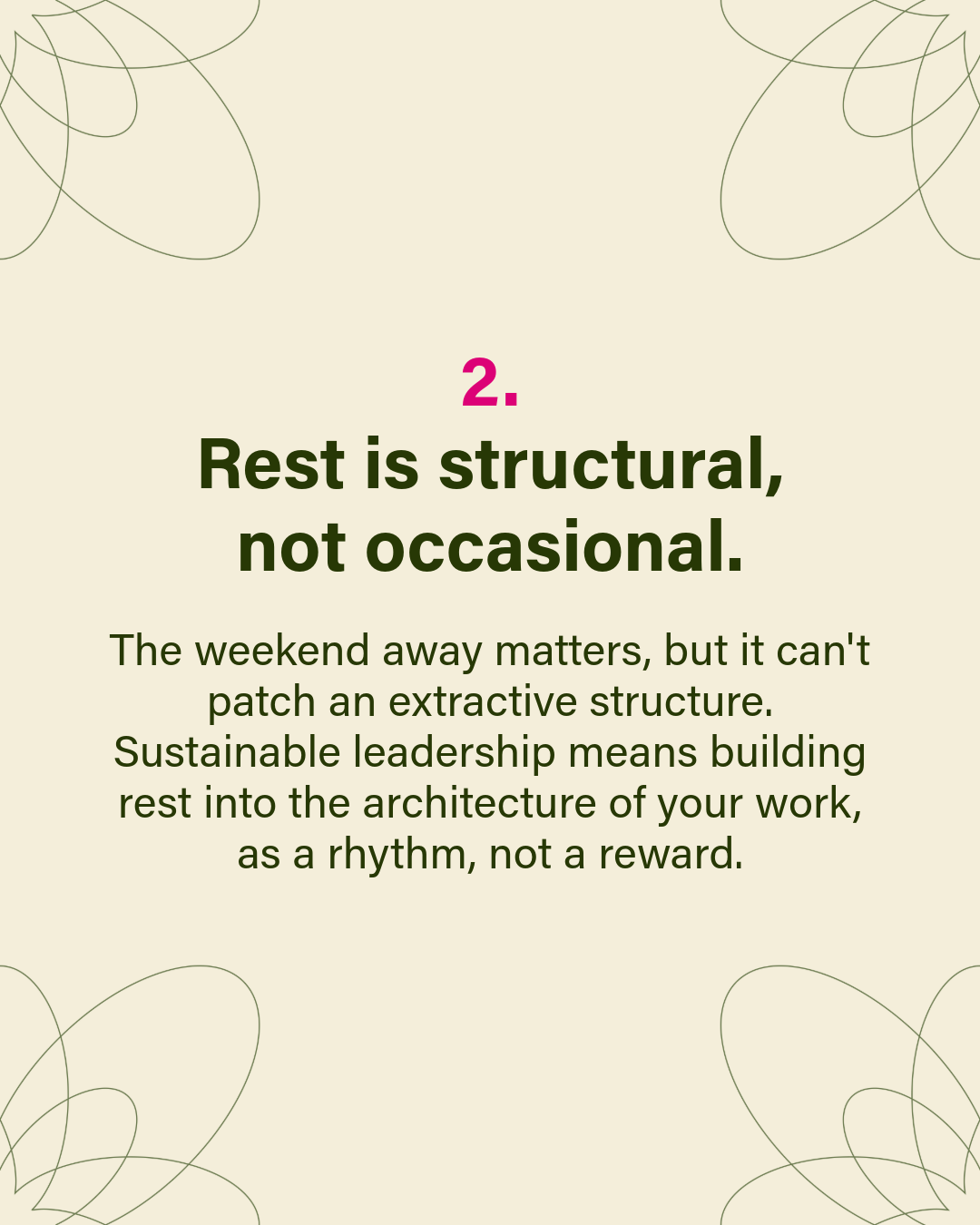
2) Rest is structural, not occasional.
The mainstream conversation about wellbeing frames rest as something you fit around the edges: the weekend away, the occasional day off. Those things matter, but they can't fix an extractive structure. If your work requires you to recover from it rather than be sustained by it, occasional rest is a plaster over a structural problem. The JERICA principle of regeneration applies inward too. A regenerative leader restores their own capacity as a consistent practice, built into the architecture of the work rather than earned once the work is done.
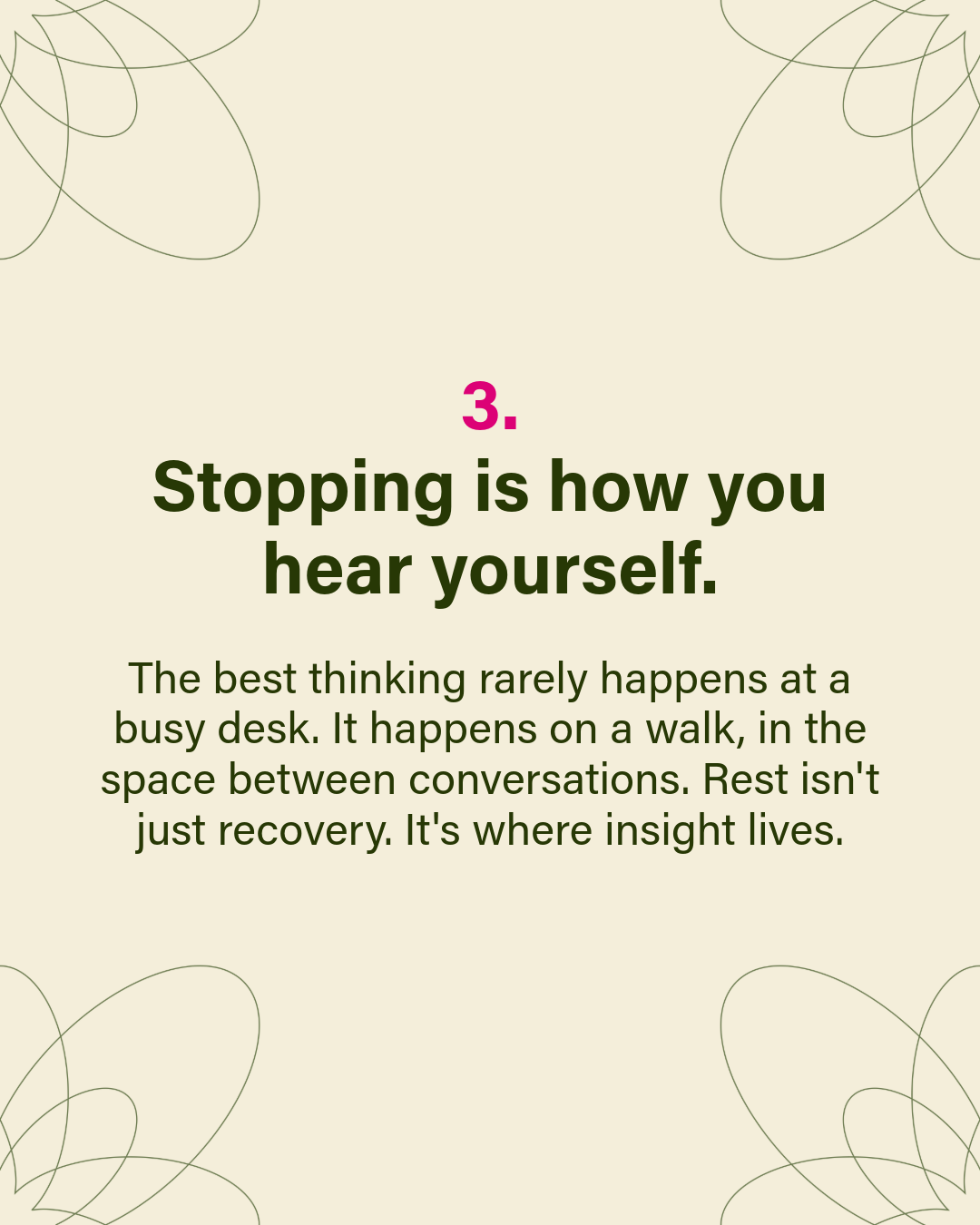
3) Stopping is how you hear yourself.
The JERICA ethical practice framework starts with Feel for a reason. But feeling requires enough quiet to notice what you're feeling, and if you are permanently in motion, the signal gets lost in the noise. The best thinking, the kind that leads to new ideas and the courage to make a difficult call, rarely happens at a desk in the middle of a busy day. It happens on a walk, in the unfilled moments our culture has decided are inefficient. Protecting the conditions for that thinking isn't indulgent. It's necessary.
Episode breakdown
00:45 Rest as Ethical Leadership
Why rest is not a productivity hack, but a non negotiable part of leading ethical, regenerative systems.
01:50 The Tension: Urgency vs Sustainability
Why leaders feel they cannot slow down, even when exhaustion undermines the very change they are trying to create.
03:09 Depletion Is Not Commitment
How chronic overwork narrows thinking, reduces empathy, and leads to poorer leadership decisions.
05:34 Rest Must Be Built Into the System
Why sustainable leadership requires designing work around regeneration, not treating rest as an occasional reward.
07:34 Rest Creates Better Thinking
How slowing down creates the space for reflection, creativity, and the clarity needed to make difficult decisions.
10:01 The Permission to Pause
Why many leaders, especially those carrying responsibility for others, struggle to believe they have earned rest.
11:09 Regeneration Starts With You
Why protecting your own capacity is not selfish, but an essential part of stewarding ethical systems.
12:15 Mentoring for Sustainable Leadership
How mentoring creates the space for leaders to step back, reconnect with their values, and build a way of working they can sustain for the long term.
If this episode resonated, share it with someone who's been quietly running on empty.
Because the systems we're trying to build, ethical, regenerative, human, need us to be human first. And that means stopping, sometimes. Actually stopping.