
How to Identify Funding Opportunities That Match Your Values and Priorities
In episode 26 of Shifting to Ethical Systems, Jules Harrison-Annear turns to a question many leaders don't stop to ask: when someone offers to pay for the change you're trying to make, what does that actually mean?
"Money is never neutral. It comes from somewhere. It was accumulated somehow. And it arrives carrying intentions, sometimes stated, sometimes not."
The language of ethical funding has never been more widely used. Impact investment, purpose-driven capital, responsible philanthropy, ESG, B Corps. That's good.
But language alone is not enough. Sometimes it reflects real commitment. Sometimes it simply repackages the same extractive practices in more appealing terms.
Here's the tension almost everyone meets: you need real resources.
And the funding most readily available often comes from organisations whose values are, at best, adjacent to yours. Foundations whose endowments were built on extraction. Corporates whose core business is the system you're trying to shift. Governments whose policies created the problem.
So do you take the money and use it for good, or does taking it make you complicit? There isn't one clean answer. But there are better and worse ways to navigate it.
And here are three reflections that stayed with us from this episode:
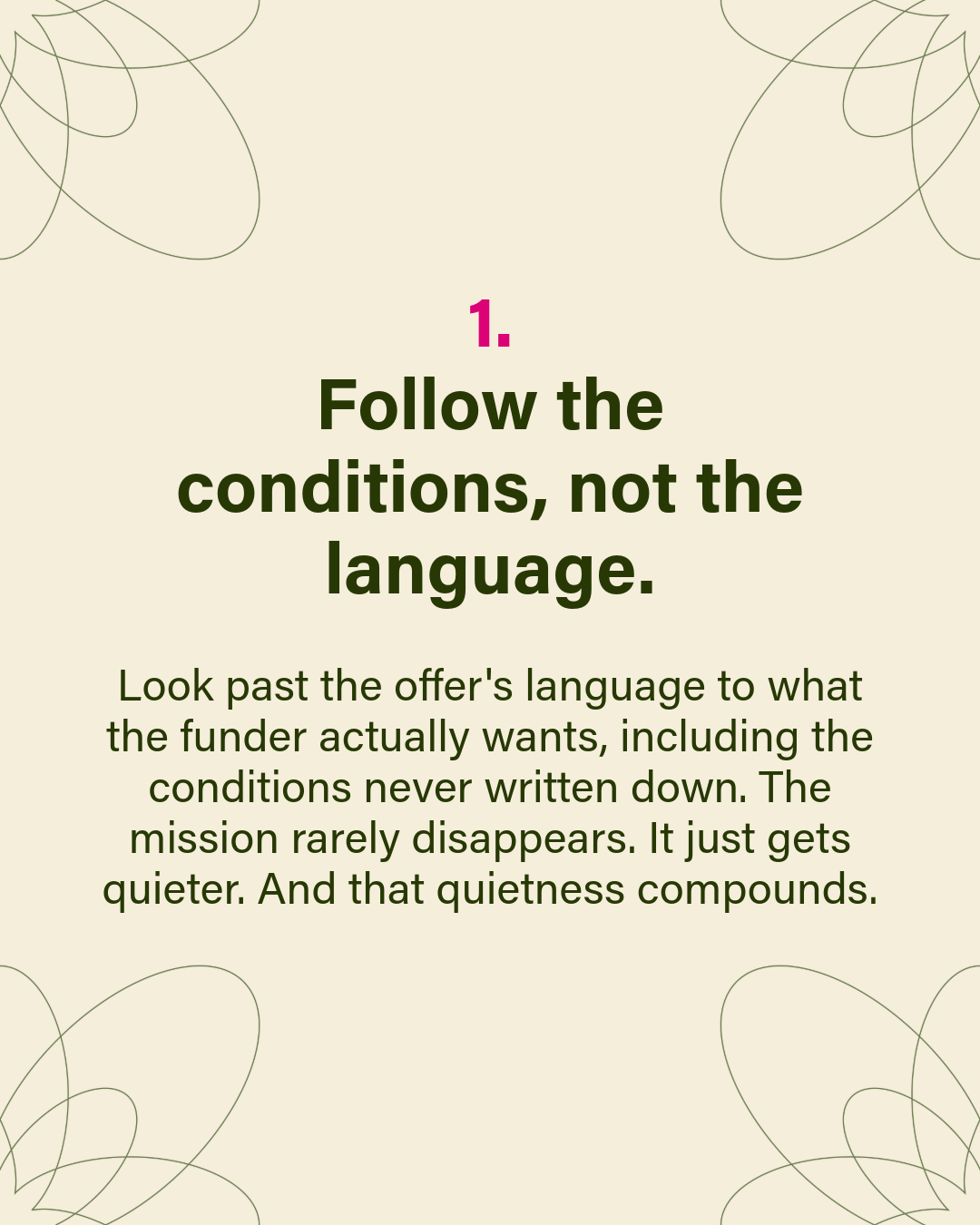
1) Follow the conditions, not the language.
Look past the offer's language to the conditions attached. Some are explicit and reasonable. Others are subtler and unwritten. A sponsor who wants you to avoid naming the part of their industry that created the problem. A funder borrowing your credibility. Those conditions slowly shape what you can say. The mission doesn't disappear. It gets quieter. And that quietness compounds.
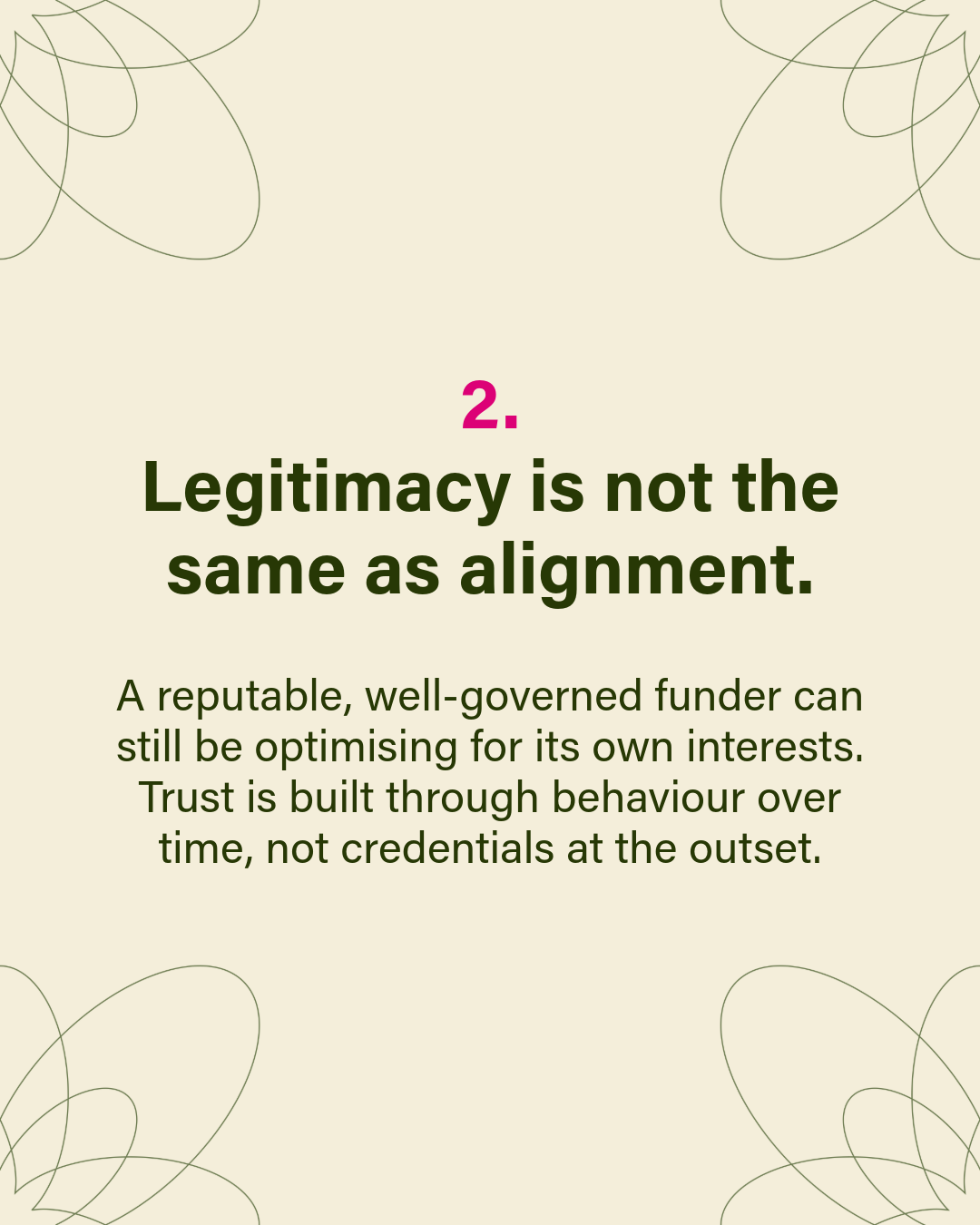
2) Legitimacy is not the same as alignment.
A major, reputable institution's legitimacy can start to feel like a proxy for alignment. But a funder can be entirely legitimate and still be optimising for its own institutional interests. The question isn't whether they're reputable. It's whose benefit they're optimising for. Trust is built through behaviour over time, not credentials at the outset.
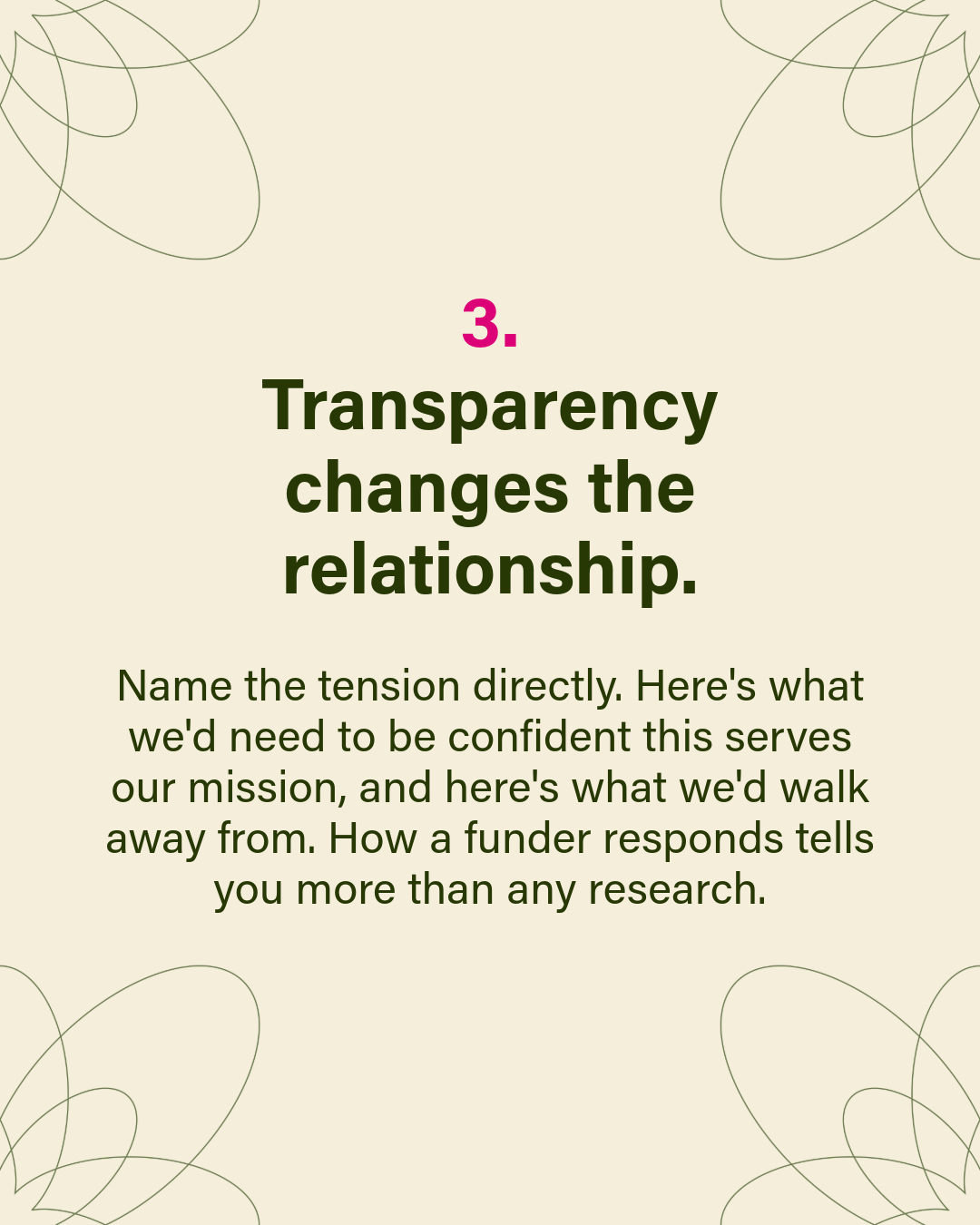
3) Transparency changes the relationship.
Rather than privately decoding a funder's intentions, name the question directly. Here's what we'd need to be confident this serves our mission, and here's what we'd have to walk away from. How a funder responds, with defensiveness, or with curiosity that matches your openness, often tells you more than any research.

Episode breakdown:
00:44 The Hidden Complexity of Ethical Funding
Why funding is never neutral and why understanding where money comes from matters.
01:31 When Ethical Language Masks Old Patterns
How the rise of impact investing and purpose-driven capital has created both genuine progress and new challenges.
02:12 The Tension: Do Good with the Money or Become Complicit?
Why ethical leaders often face difficult decisions when funding comes from imperfect sources.
03:19 Follow the Conditions, Not the Language
Why the true test of alignment lies in what funders expect, not what they say.
04:18 The Power of Unwritten Conditions
How subtle expectations can gradually influence what organisations are willing to say, challenge, or change.
05:37 The Cost of Invisible Influence
Why missions rarely disappear overnight, but can slowly become quieter over time.
06:03 Legitimacy Is Not the Same as Alignment
How reputation and credibility can create a false sense of values alignment.
07:00 Whose Success Is Being Optimised?
A critical question for understanding whether a funder's goals truly match your own.
07:47 Trust Is Built Through Behaviour, Not Credentials
Why communities often judge partnerships based on actions rather than reputation.
08:14 Transparency Changes the Relationship
How honest conversations about expectations can reveal more than extensive due diligence.
09:26 What Difficult Conversations Reveal
Why a funder's response to transparency can be one of the strongest indicators of genuine alignment.
09:58 The Personal Cost of Misaligned Funding
How managing the gap between your values and a funder's expectations creates hidden exhaustion.
10:49 Why Alignment Is Also a Sustainability Issue
How patient capital and steward ownership support long-term impact in ways misaligned funding often cannot.
11:29 Questions That Keep You Honest
The practical framework Jerica uses to evaluate funding opportunities and partnerships.
12:16 Building Trust That Lasts
Why values-led funding decisions often create deeper impact than the most attractive opportunities on paper.
13:00 Can You Afford Not to Be Selective?
A closing reflection on the long-term consequences of who funds your work.
If this episode made you reflect on who is funding the change you're trying to create, share it with another founder, changemaker, investor, or ecosystem builder.
Because funding is never just about money. It shapes what gets prioritised, what gets protected, and sometimes, what quietly goes unsaid.
The goal isn't to find perfect funders or perfectly aligned opportunities. It's to understand the conditions attached to the resources you accept and to make choices that strengthen, rather than dilute, your mission.
And that's where meaningful systems change begins.