
The Art of Saying No: How Boundaries Build Integrity and Trust
In episode 20 of Shifting to Ethical Systems, Jules Harrison-Annear explores one of the hardest things ethical leadership asks of us, saying no, and why getting better at it protects the long-term integrity of what you're building.
"The boundaries you hold don't diminish what you're building. They define it."
There's a version of saying no that's easy. The harder version is when the thing looks good. Good money, good exposure, a respected organisation. And yet something feels off.
Building an ethical business often means operating where genuinely aligned opportunities are scarcer than you'd like. So when something promising comes along, there's a real temptation to make it work. To emphasise the overlap. To minimise the divergence. And sometimes you can. Not every yes has to be perfect. But there's a difference between a strategic yes made with clear eyes and a yes that's really a slow capitulation to pressure or scarcity. Knowing which is genuinely difficult, and worth taking seriously.
And here are three reflections that stayed with us from this episode:
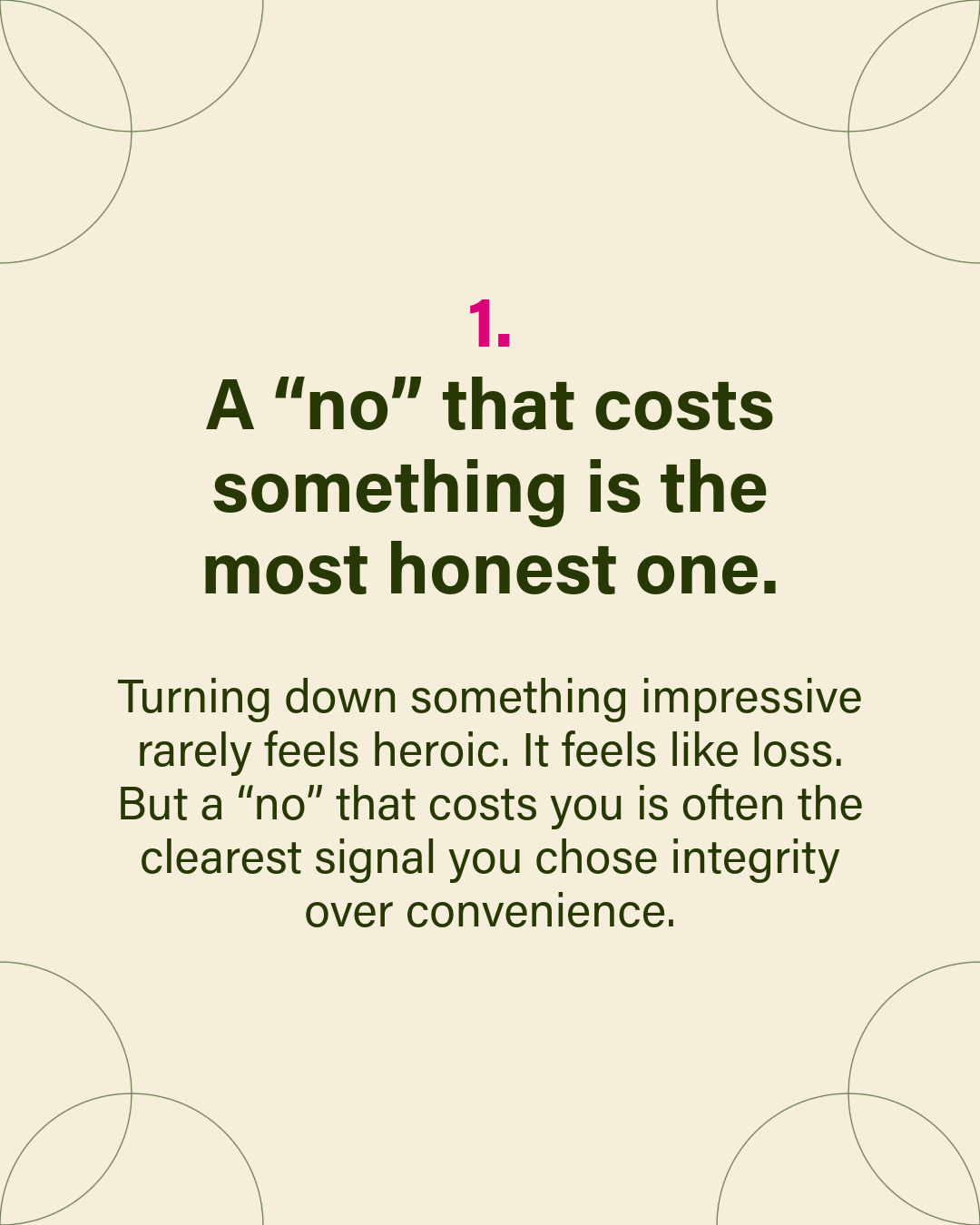
1) A “no” that costs something is the most honest one.
Jules has turned down impressive opportunities, and it felt like loss, with second-guessing that lasted weeks. But gradually the path stayed on revealed itself. The people who found her because of what she stood for, not despite it. A costly “no” is often the clearest signal you chose integrity over convenience.
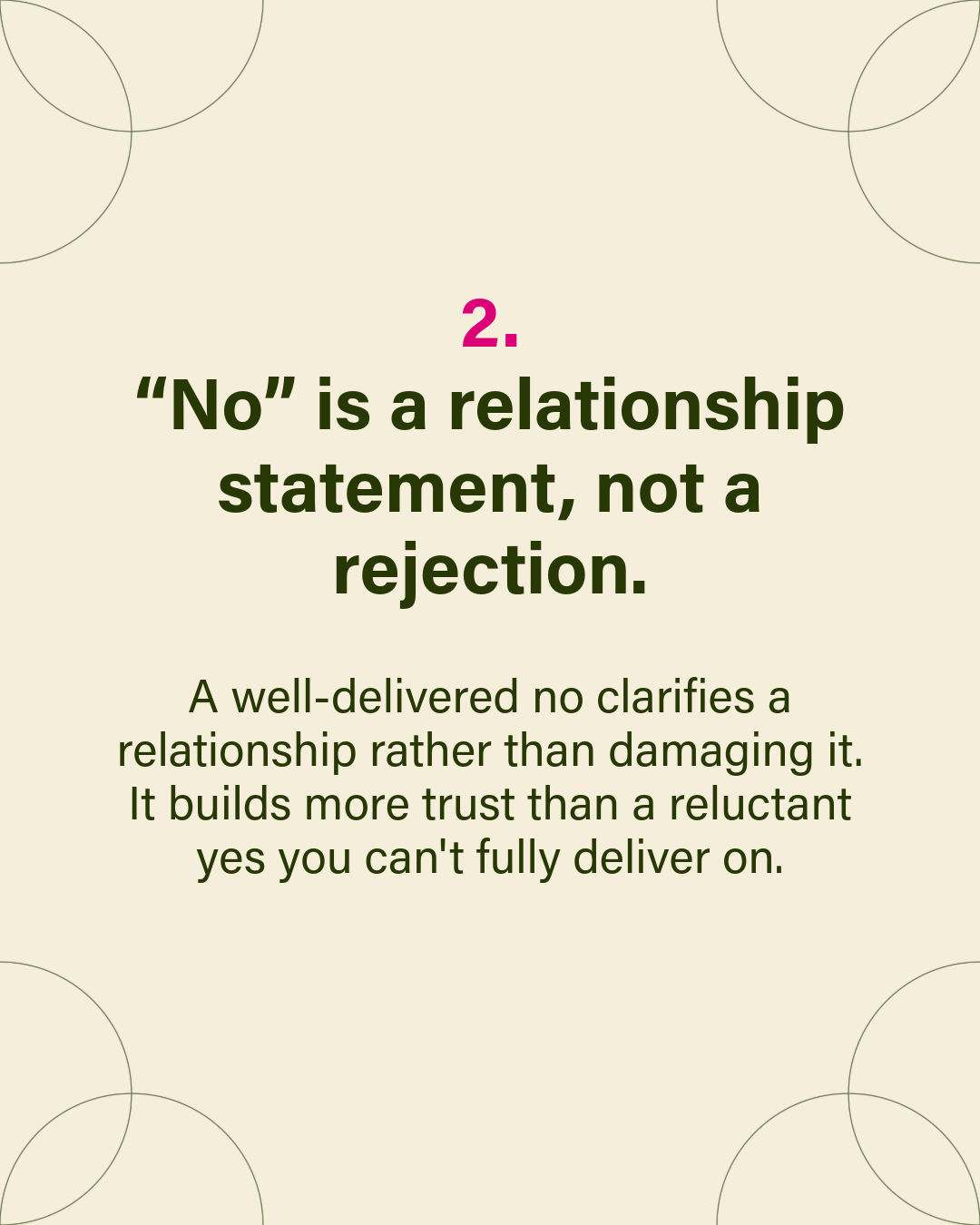
2) “No” is a relationship statement, not a rejection.
The clearest, most respectful no clarifies a relationship: I respect what you're offering enough to be honest it's not the right fit. A well-delivered no strengthens trust more than a reluctant yes. People return to the leaders who were honest with them.
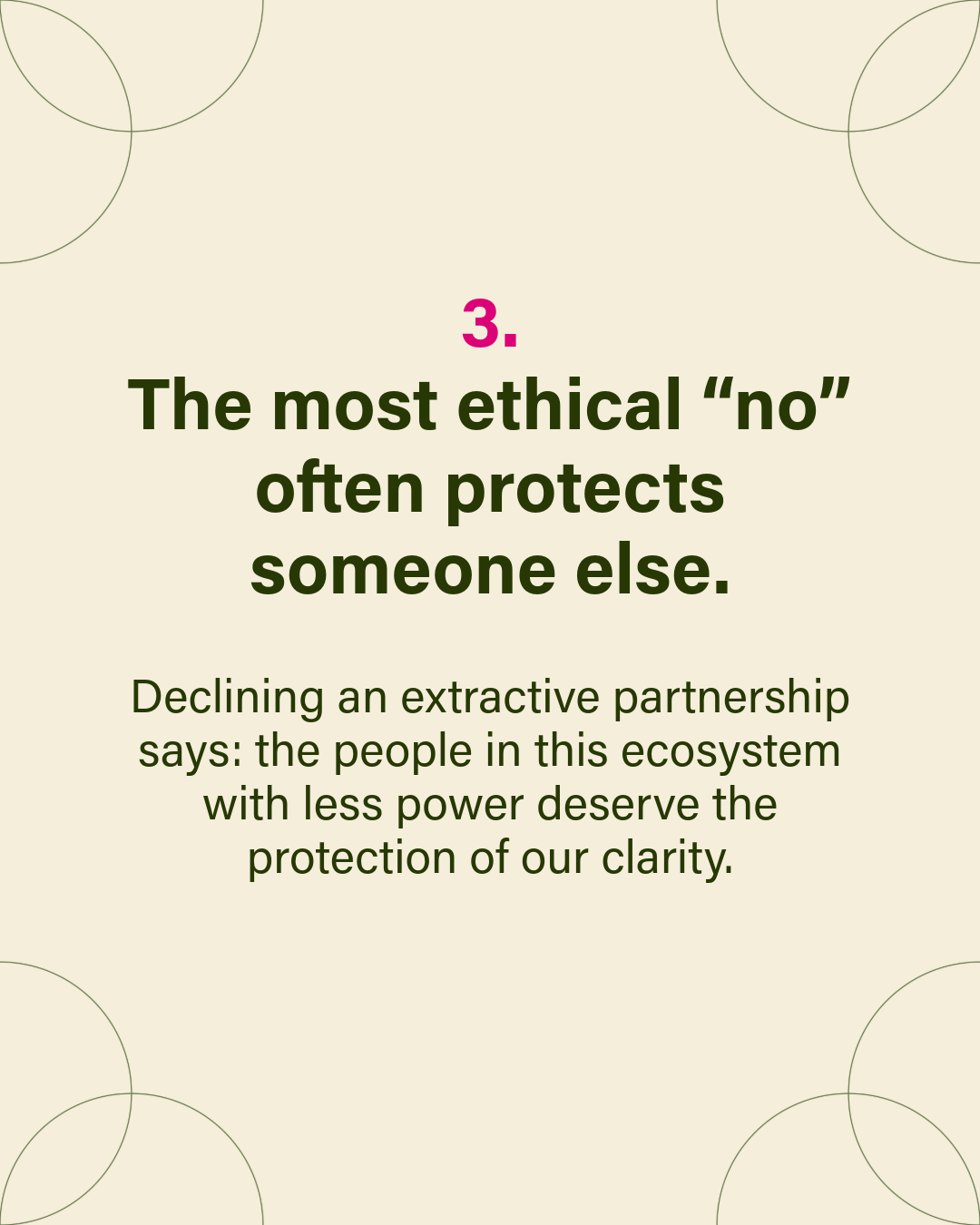
3) The “no” that protects someone else.
Sometimes the most ethical “no” protects someone with less power. Every time JERICA declines an investor whose model would extract rather than regenerate, that no says: the people in this ecosystem deserve the protection of our clarity. It's structural. About what kind of system you're building, and who it serves.

Episode breakdown:
00:44 Why “No” Is So Difficult
Why saying no becomes harder when opportunities are scarce, relationships matter, and the stakes feel high.
01:33 The Hardest Kind of No
How to recognise when an opportunity looks right on paper but feels wrong in practice.
02:20 The Tension: Strategic Yes or Slow Capitulation?
Why distinguishing between intentional compromise and pressure-driven decision-making requires real discernment.
03:07 A No That Costs Something Is Often the Most Honest One
Jules reflects on turning down a seemingly valuable opportunity that conflicted with deeper principles.
04:09 Living with the Second-Guessing
Why ethical decisions often bring uncertainty, self-doubt, and the temptation to revisit your choice.
05:07 The Long-Term Value of Integrity
How staying aligned creates space for the right people, partnerships, and opportunities to emerge.
05:47 Regret or the Cost of Staying True?
A reflection on the difference between missing an opportunity and honouring your values.
06:04 No Is a Relationship Statement, Not a Rejection
Why a clear and respectful no can strengthen trust rather than damage it.
07:02 Honesty Builds Stronger Partnerships
How transparency and clear boundaries create credibility over time.
07:39 The No That Protects Someone Else
Why ethical leadership sometimes requires declining opportunities to safeguard communities, partners, and future outcomes.
08:30 Protecting the Integrity of the System
How saying no can become a structural act that shapes who benefits from the systems you're building.
09:02 Whose Interests Are You Protecting?
A question for leaders navigating difficult decisions and competing pressures.
09:25 Developing the Practice of Saying No
Why discernment, confidence, and ethical boundaries strengthen through repetition.
10:15 Ethical Partnerships Create Safer Decisions
How trust and collective reflection help leaders make difficult choices with greater clarity.
10:40 Finding the No as Well as the Yes
Why collaborative spaces can help uncover the decisions that truly align with your values.
11:34 The Boundaries You Hold Define What You Build
How every no helps shape the integrity, direction, and impact of your work.
If this episode made you pause and consider the opportunities you're saying yes to, share it with another founder, changemaker, or ecosystem builder.
Because the most important decisions aren't always the ones that move you forward. Sometimes they're the ones you decline.
The goal isn't to avoid risk or discomfort. It's to build something with enough integrity that your choices serve the future you're trying to create, not just the pressure of the present.
And that's where meaningful systems change begins.