
In episode #47 of Shifting to Ethical Systems, Esteban Fernandez Drovetta draws a line between two kinds of work: the ethical project and the catalyst project. Both are important. They are not the same thing. And understanding what separates them, what turns a well-intentioned initiative into something that genuinely shifts a system, is one of the most practical questions in the work JERICA Global does.
"If the project would collapse without your continued involvement, it is not yet a catalyst."
A catalyst project is not a catalyst enterprise
Esteban starts with a distinction that is easy to miss. An enterprise is an operating entity: registered, structured, accountable in the ways a business is accountable. A catalyst project doesn't need any of that. It doesn't need a company number, a board or a revenue model in place from day one.
What it needs is harder to systematise: the capacity to incite, create and sustain systemic transformation. A catalyst project changes the conditions around it as well as what it directly touches. It shifts how people think, how communities organise and how resources move, in ways that continue after the project itself has evolved or ended.
That is a high bar, and most initiatives don't clear it, however ethical and well designed they are. As Esteban puts it, this is usually not because they fail, but because they were designed to deliver something specific rather than to change something structural.
Why tourism is such a clear test
Esteban explores the distinction through social entrepreneurship in tourism, a field he has been spending a lot of time in. Tourism is a useful lens because it sits at both extremes.
At its worst, it is one of the most extractive industries on the planet: it takes from cultures, ecosystems and communities, and concentrates the returns somewhere else entirely.
At its best, it is one of the few economic activities that can, if structured correctly, keep value inside the communities that create the experience in the first place.
The gap between those two versions of tourism is not a gap in technology or marketing. In Esteban's words, it is a gap in ethics, in ownership, and in who has agency over the door to their own place.
The tension: designed around the visitor
Most tourism initiatives with good intentions are still designed around the visitor: the experience, the comfort, the narrative. The community is the backdrop. Consulted perhaps, involved perhaps, but the logic of the model still flows from the outside in.
A catalyst project inverts that. It starts with the community's agency, and with the question: what do these people want to share, on what terms, and with whom? Then it builds the tourism model around that answer, instead of building the model first and asking the community to step into it.
The inversion sounds simple. It is not. It requires a different development process, a different relationship with investors and a different definition of success. The metric is no longer visitor numbers or revenue per night. It is whether the community's sovereignty over their own culture and land is intact, or strengthened, as a result.
Vanua: when the model is already understood
JERICA Global's work in Fiji began with Cécile Fiji, a catalyst project in its own right. Over time, that relationship grew to include the mataqali, the indigenous landowning clans, of Kadavu on Ono Island. JERICA's role is to develop and help implement an economic development plan rooted in the community's own vision for their land, their culture and their future.
The model JERICA proposed included steward ownership: the principle that land and resources are held in trust for future generations, rather than treated as assets to be extracted or sold. It came with structures for long-term governance, intergenerational benefit, and decisions made at the pace and on the terms of the community.
When the mataqali reflected on the model, they told the team that it aligned with their own concept of Vanua. Vanua doesn't translate simply. It encompasses love for land, people, culture, and the relationships between them across time. It is the understanding that a community and the place it inhabits are not separate things, so that caring for one means caring for the other, across generations.
The business model was not foreign to them. It was legible. It matched something they already held, and that mainstream economic development had consistently asked them to set aside in favour of models with shorter horizons and concentrated ownership.
Bigger, in the sense of longer
Then the conversation changed direction. The mataqali started thinking bigger. Not bigger in the sense of more visitors, more revenue or more extraction, but bigger in the sense of longer. What could this mean for the next generation, and the one after that? What would Ono Island's economic future look like if it were designed around the depth of what the community holds, rather than the speed at which it could be monetised?
Esteban calls this a catalyst moment. It happened not because JERICA brought an answer, but because the conversation created a space in which the community could think differently about a question they had been carrying for a long time.
What changes when you design with catalyst intent
Designing with catalyst intent, rather than programme delivery intent, shifts several things in practice:
You start with community agency rather than community consultation. The question is no longer "have we involved them?" but "are they the ones holding the door?"
You look for existing frameworks before introducing new ones. The most durable models connect to something the community already understands and values.
You design for time horizons longer than your funding cycle. If the project would collapse without your continued involvement, it is not yet a catalyst.
You measure the conditions as well as the deliverables. Has the community's sense of what's possible changed? Has the system moved?
The standard JERICA holds everything to
At JERICA Global, catalyst projects are not a category of work. They are the standard every project is held to, whether in transforming organisations, in tourism, in ecosystem work or in economic development with indigenous communities. Each one is held against a single question: will this create conditions for transformation that extend beyond our involvement? If the answer is no, the project is redesigned until it is.
The same commitment sits behind JERICA's involvement with the Social Entrepreneurs in Tourism Competition, where Esteban is on the 2026 jury. Initiatives that use tourism to return agency, economic participation and cultural sovereignty to communities, while staying financially sustainable, are catalyst projects in action. The competition's final pitch event and award ceremony takes place on 23 November 2026.
And here are three reflections that stayed with us from this episode:
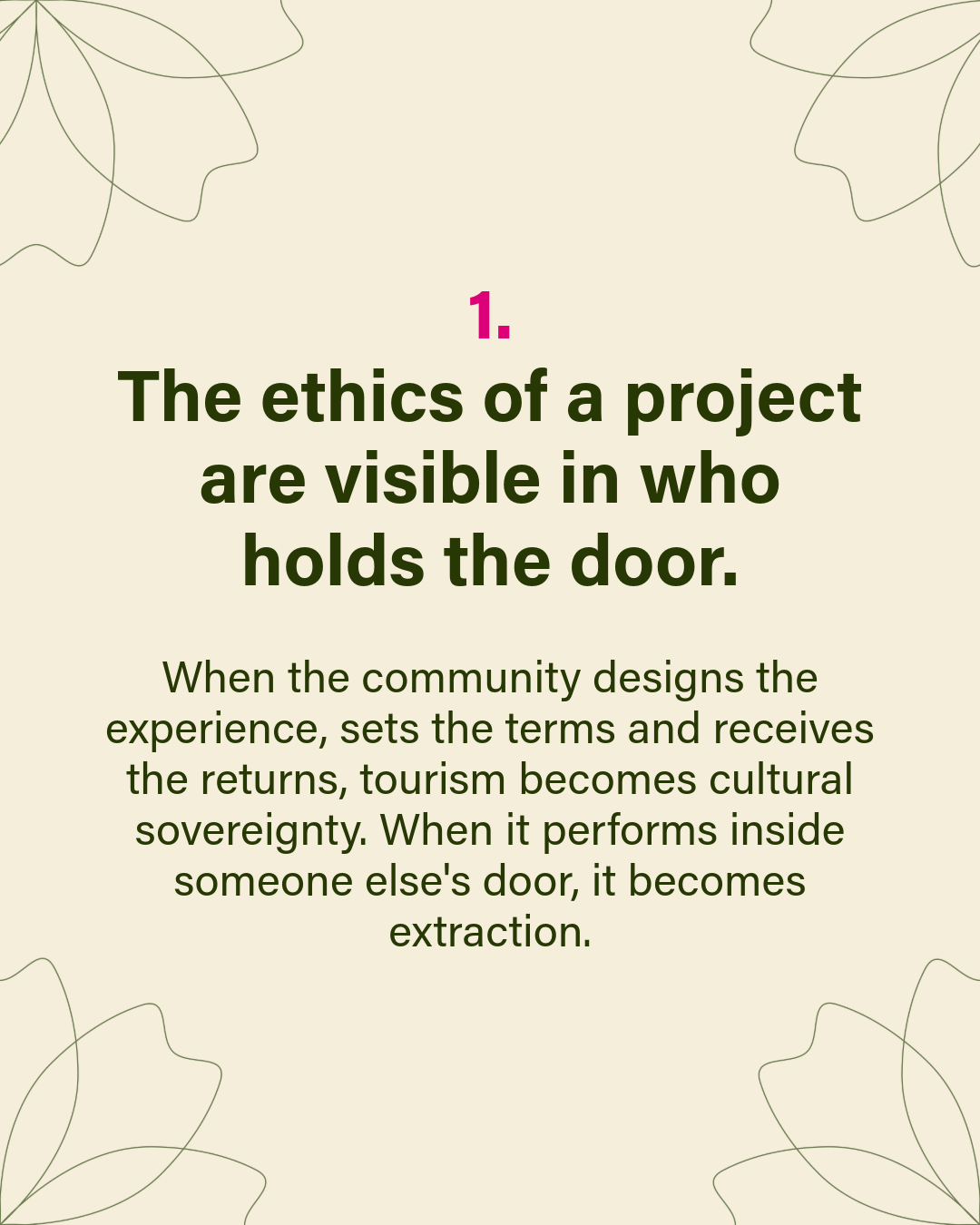
1) The ethics of a project are visible in who holds the door.
Tourism is literally about opening a door to a place and its people, which makes it one of the clearest tests of any project's ethics. The question is not whether the door gets opened, but who holds it: who decides what visitors see and don't see, what stories get told, and what remains private. When the community designs the experience, sets the terms and receives the returns, tourism becomes an expression of cultural sovereignty. When the community performs inside someone else's door, it becomes extraction, however well-intentioned.
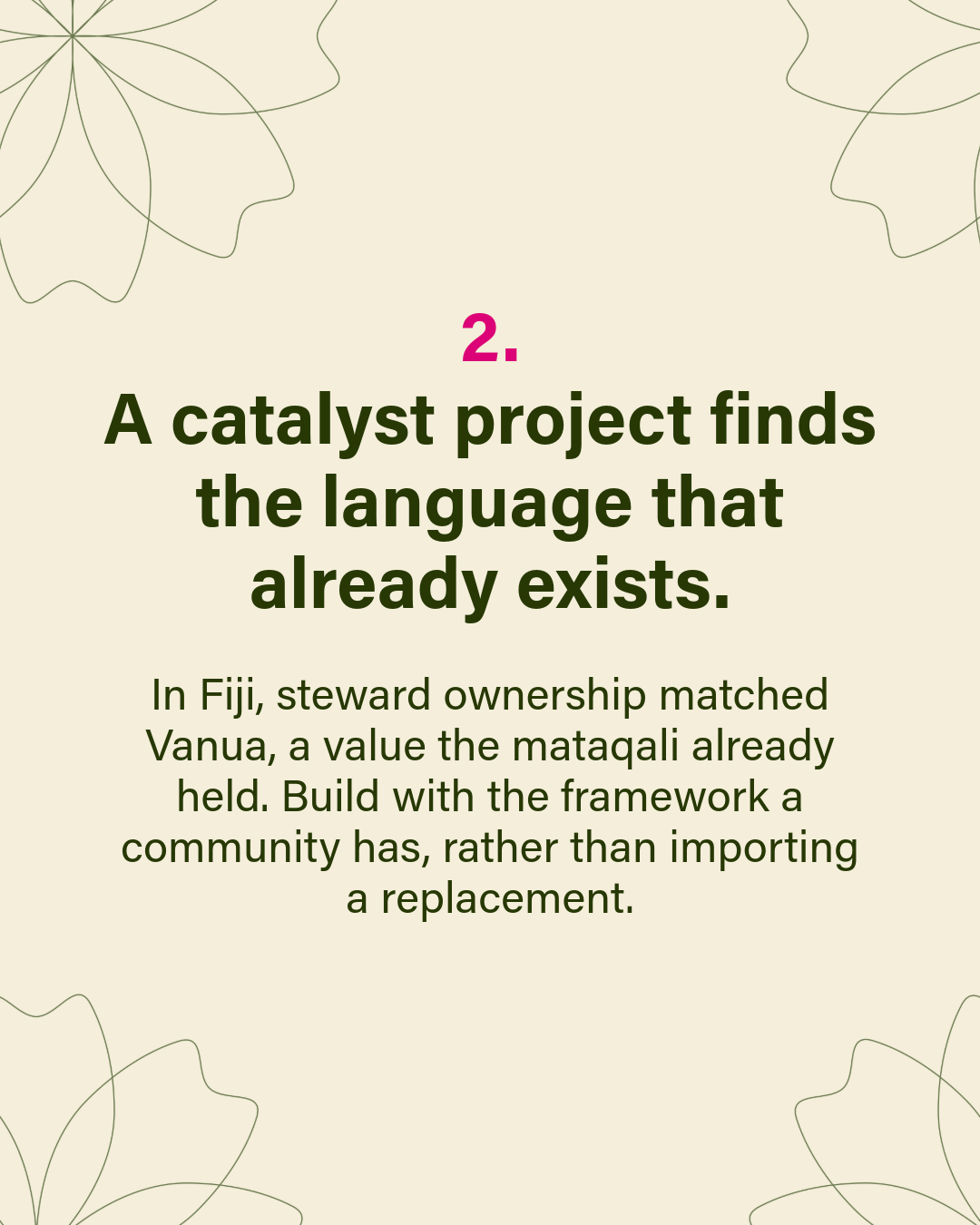
2) A catalyst project finds the language that already exists.
A catalytic project doesn't have to introduce entirely new concepts to the communities it works with. It finds the framework they have always held, the one development models have consistently ignored or overwritten, and builds with it. Steward ownership was legible to the mataqali because it described Vanua, something they already understood. When that recognition happens, the community sees that what it already holds has economic and legal form, and the ambition changes. The same applies to any community, including the customers you are creating a product or service for.
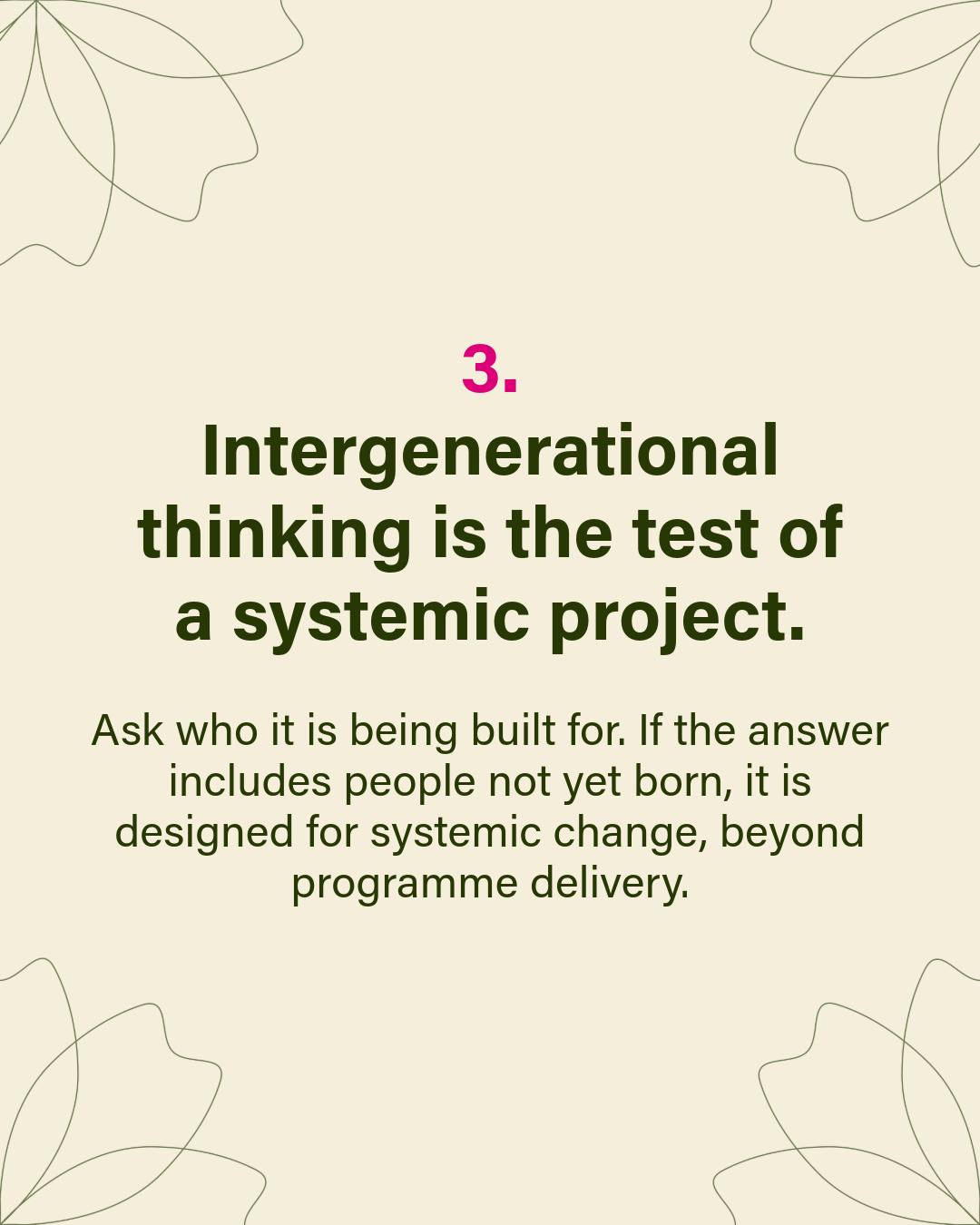
3) Intergenerational thinking is the test of whether a project is truly systemic.
Ask who the project is being built for. If the answer is current beneficiaries, investors and visitors, the project may be excellent, but it is bounded, and its success ends when the programme, the novelty, or the funding cycle does. If the answer includes people not yet born, such as the next generation of iTaukei in Fiji, it is a different kind of project. That shift cannot be engineered from the outside, but the right conditions can invite it: respect, genuine partnership, and a model honest enough to make room for that kind of thinking.

Episode breakdown:
00:45 Ethical Project or Catalyst Project?
Why the two are not the same, and why the difference is one of the most practical questions in JERICA's work.
01:38 The Social Entrepreneurs in Tourism Competition 2026
A note on the final on 23 November, and why Esteban is following it as a member of the jury.
02:12 Catalyst Project vs Catalyst Enterprise
Why a catalyst project doesn't need a company number, a board or a revenue model from day one.
03:27 Tourism at Its Worst and at Its Best
Why the gap between extractive and regenerative tourism is ethics, ownership and agency.
04:20 The Tension: Designed Around the Visitor
What happens when a catalyst project inverts the model and starts with community agency.
05:38 The Story: Vanua and the Mataqali of Kadavu
How steward ownership turned out to match a value the community already held.
08:06 Bigger in the Sense of Longer
The moment the conversation turned to the next generation, and the one after that.
08:57 Insight 1: The Ethics of a Project Are Visible in Who Holds the Door
Who decides what visitors see, what stories get told, and who receives the returns.
10:38 Insight 2: A Catalyst Project Finds the Language That Already Exists
Why the most durable models build with frameworks a community already holds.
12:32 Insight 3: Intergenerational Thinking Is the Test of Whether a Project Is Truly Systemic
A simple diagnostic: who is this being built for?
14:18 How This Changes Your Practice
Four shifts that come with designing for catalyst intent rather than programme delivery.
15:19 Catalyst Projects at JERICA Global
The one question every JERICA project is held against.
If this episode resonated, share it with someone building in tourism, or in any space where a community's place, culture or future is part of what's on offer. Because the most important question in that work is always the same: who holds the door?
And if it raised questions about the projects you're leading or investing in, whether they're designed to deliver or designed to catalyse, we'd love to talk.