
How to Build Ecosystems That Don’t Depend on You
In episode 17 of Shifting to Ethical Systems, Esteban Fernandez Drovetta explores a tension many ecosystem builders quietly carry:
What happens if I step back?
When you’ve built the relationships, held the vision, and connected the system, it’s easy to feel like everything depends on you. But what if that’s exactly the risk?
“If the ecosystem can’t function without you, it’s not an ecosystem. It’s a dependency.”
Ecosystem building is often invisible work.
There’s no neat structure. No clear lines of control. No single point of success.
But there is a temptation: to become the centre.
The one connecting everything.
The one making it work.
The one holding it all together.
And at first, that feels necessary.
But over time, it creates fragility.
Because when everything flows through one actor, everything depends on them. And dependency is not resilience. It’s risk.
Ethical ecosystem leadership asks something harder: not how to stay at the centre, but how to design systems that thrive without you.
And here are three reflections that stayed with us from this episode:
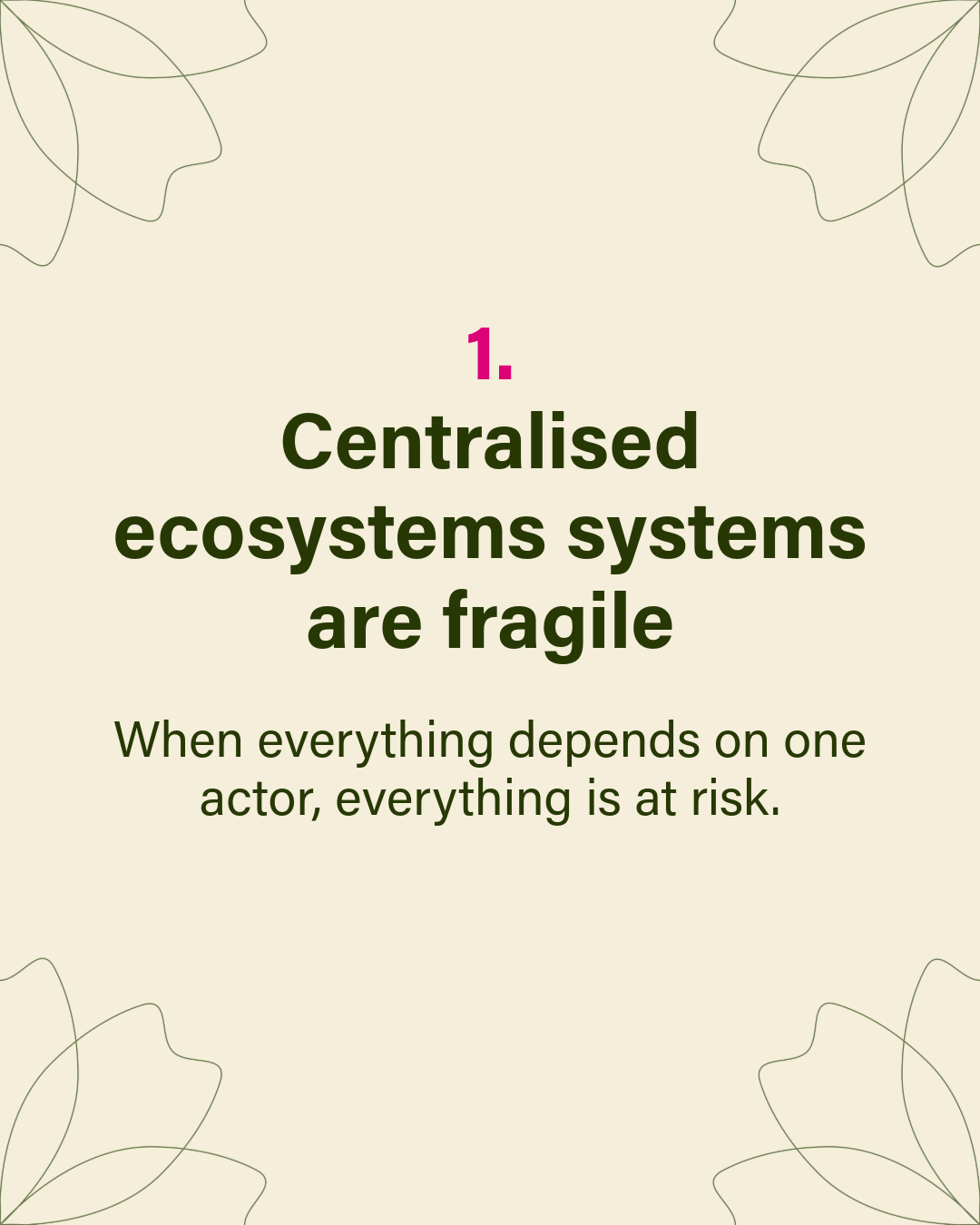
1) Centralised ecosystems are fragile
When one organisation holds the connections, decisions, and resources, the system becomes vulnerable. If that centre shifts or disappears, everything else struggles to adapt.
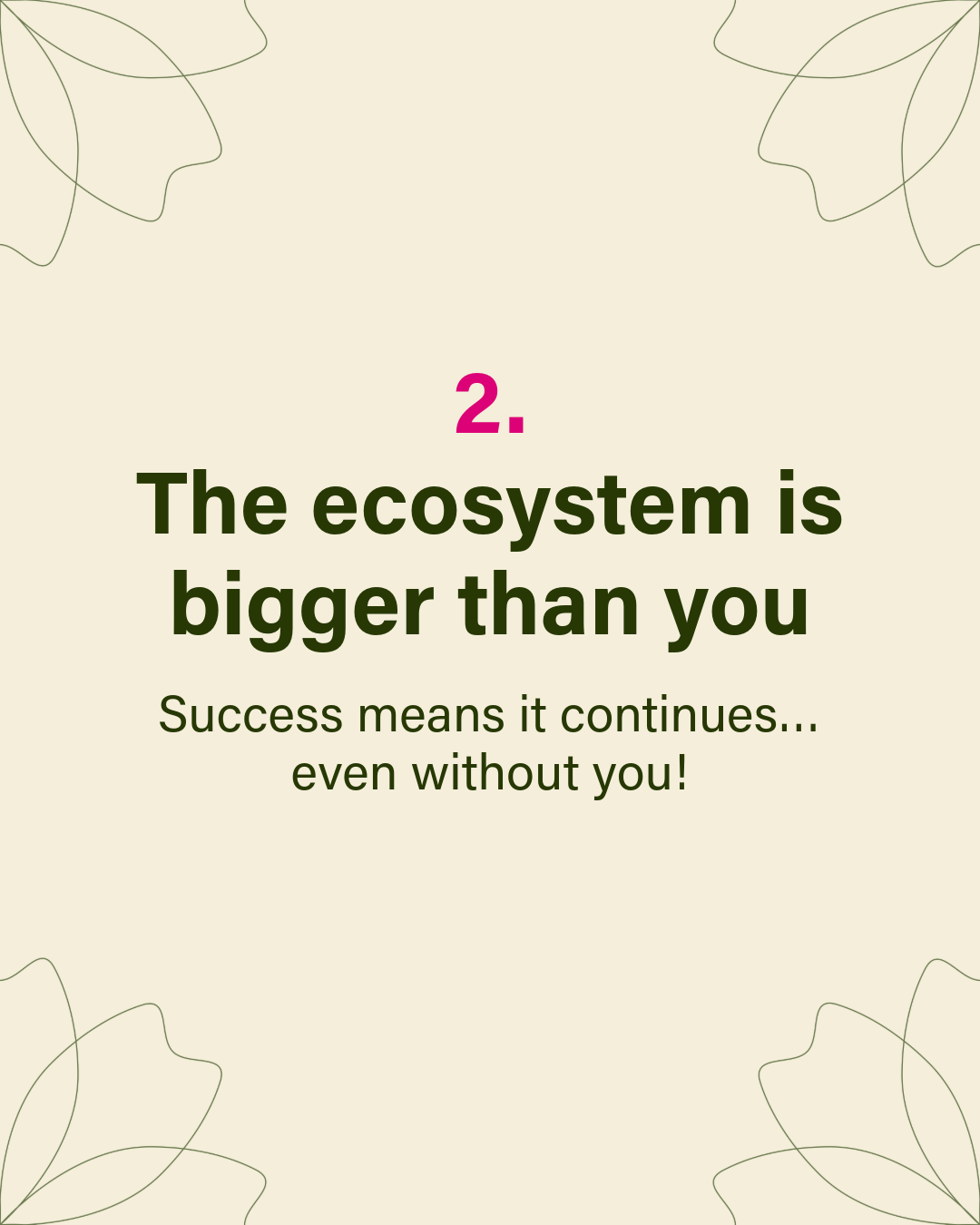
2) The ecosystem is bigger than you
No matter how much you’ve contributed, the goal isn’t to remain essential. It’s to build something that continues, evolves, and grows beyond your involvement.
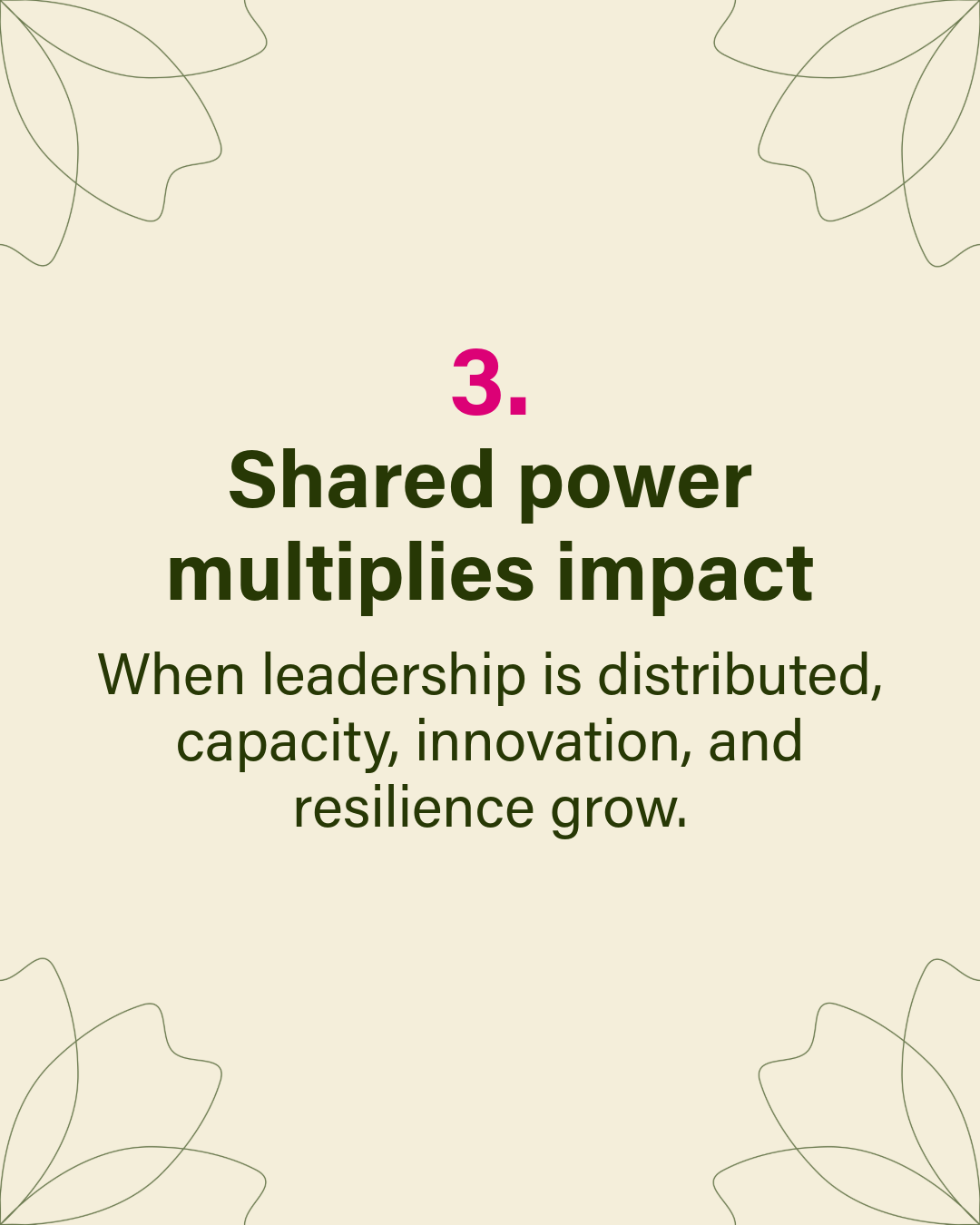
3) Sharing power multiplies impact
When leadership, decision-making, and visibility are distributed, new capacity emerges. More people contribute, more ideas surface, and the system becomes stronger than any one actor could create alone.
Episode breakdown:
00:44 Ecosystem Builders and the Illusion of Centrality
Why leaders often feel they need to be at the centre — and why that creates risk.
02:15 The Tension: Letting Go of Control
The fear of stepping back when you’ve built the system.
03:30 A Real Example: The Fiji Catalyst Project
How shifting from leading to supporting strengthened the ecosystem.
06:25 Redefining Your Role
Why your position in the ecosystem will change and why that’s a good sign.
07:40 Centralised vs Decentralised Systems
Why distributed ecosystems are more resilient.
08:43 The Whole Is Greater Than Any One Part
Why ecosystems should evolve beyond their original builders.
09:58 Sharing Power Multiplies Impact
How distributing leadership unlocks innovation and capacity.
11:27 From Control to Catalyst
How governance, partnerships, and visibility shift when power is shared.
If this episode made you reflect on your role in the systems you’re building, share it with another ecosystem builder. Because the goal isn’t to be indispensable. It’s to create something that lasts — something that adapts, grows, and thrives beyond any one of us.
And that’s where real systems change begins.